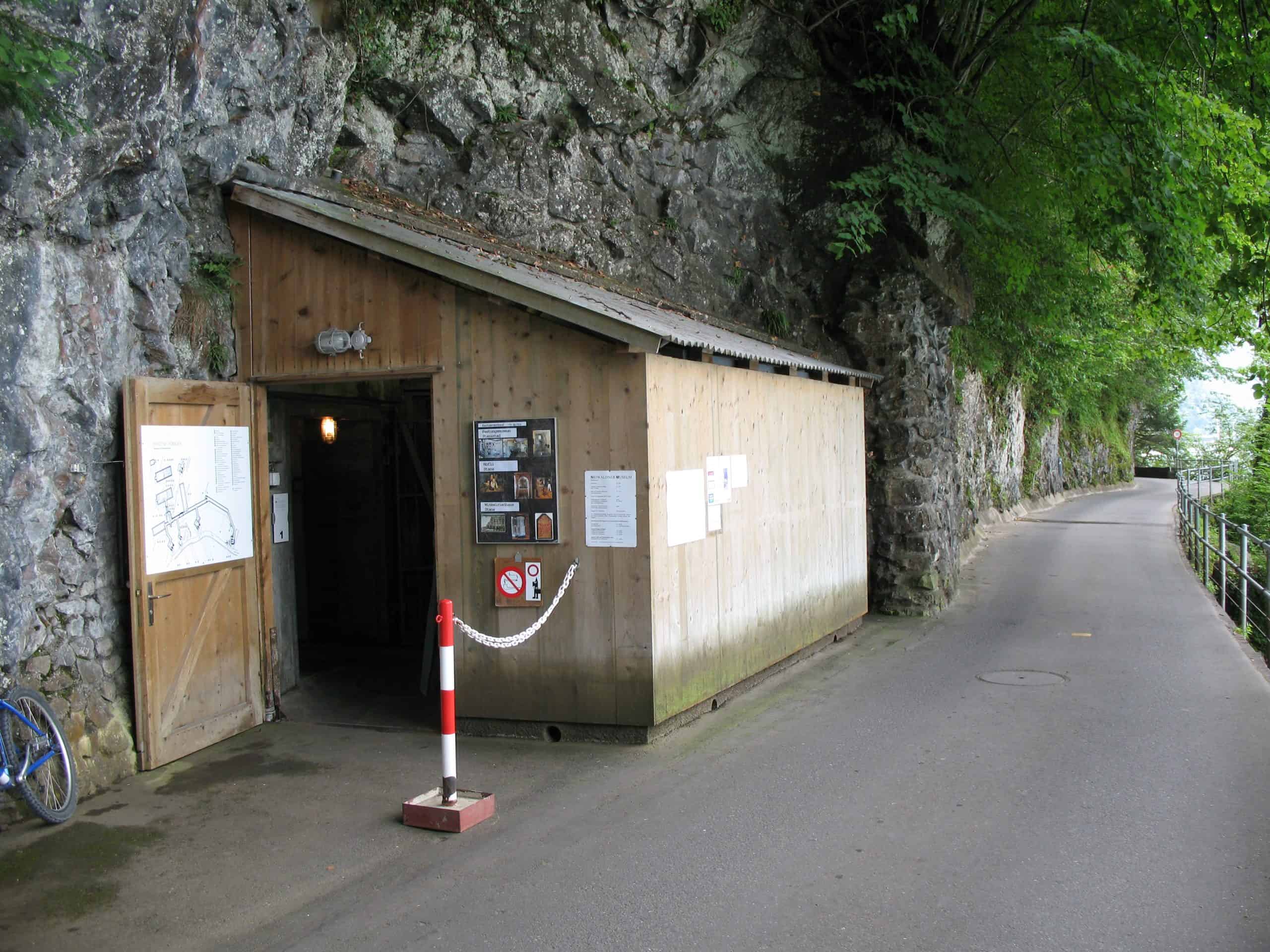
On a wooded hillside above Lake Lucerne, surrounded by residential areas and hiking paths, a concrete door set into the mountainside opens into a world that most of Festung Fürigen’s neighbours never knew existed.
Artillery Work Fürigen — military designation A 2255 — was built in 1941 as part of a network of nine fortresses defending central Switzerland. Together, these nine forts housed 44 artillery cannons, positioned to create interlocking fields of fire across the lake and valleys below. Fürigen’s role was to control the approaches to the Gotthard from the northwest, forming part of the outer defensive ring of the National Redoubt.
The fortress was carved into the mountainside above Stansstad, its entrance invisible from the lake. Inside, tunnels connected gun emplacements to ammunition stores, living quarters, a command post, and the infrastructure needed to keep a garrison operational for extended periods. The gun positions themselves were designed to be nearly undetectable: barrels could be retracted behind armoured shutters that blended into the rock face.
Decommissioning and the Museum
Festung Fürigen served throughout the Cold War before being decommissioned as part of Army Reform 95 and the subsequent Army XXI restructuring. Unlike many decommissioned Swiss fortresses that were simply sealed and abandoned, Fürigen was preserved and opened to the public as a museum.
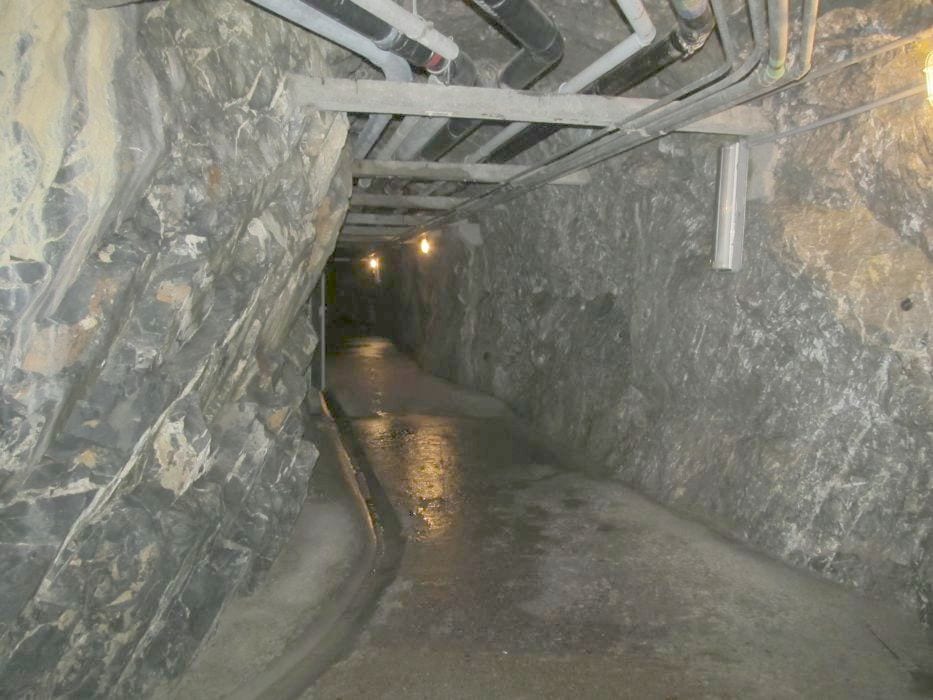
The museum experience is remarkably well-preserved. Visitors walk through the same narrow concrete corridors that soldiers once patrolled, past dormitories with metal-framed bunk beds, through the command room with its original communications equipment, and into the gun emplacements where the fortress’s artillery could still technically fire today. The guides — many of them former military personnel — provide detailed accounts of daily life inside the fortress, the defensive strategy of the region, and the psychological reality of living and working underground.
The fortress gained international attention when it was featured on Rick Steves’ European travel programme, introducing the concept of Swiss hidden fortifications to a broad audience.
Part of a Larger Network
Fürigen is one of nine forts in the central Switzerland defensive network, which also includes Fort Wissiflue, Fort Kilchlidossen, Fort Ursprung, and Fort Mueterschwanderberg.
While Fürigen is the most visitor-friendly of the group, the existence of the broader network illustrates the density and redundancy that characterised Swiss defensive planning: even in a single lake region, multiple overlapping fortifications ensured that no single point of failure could compromise the defence.