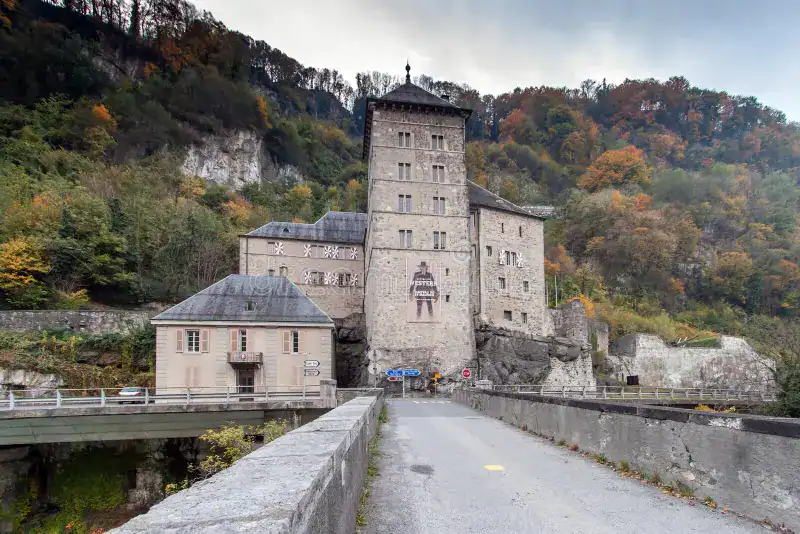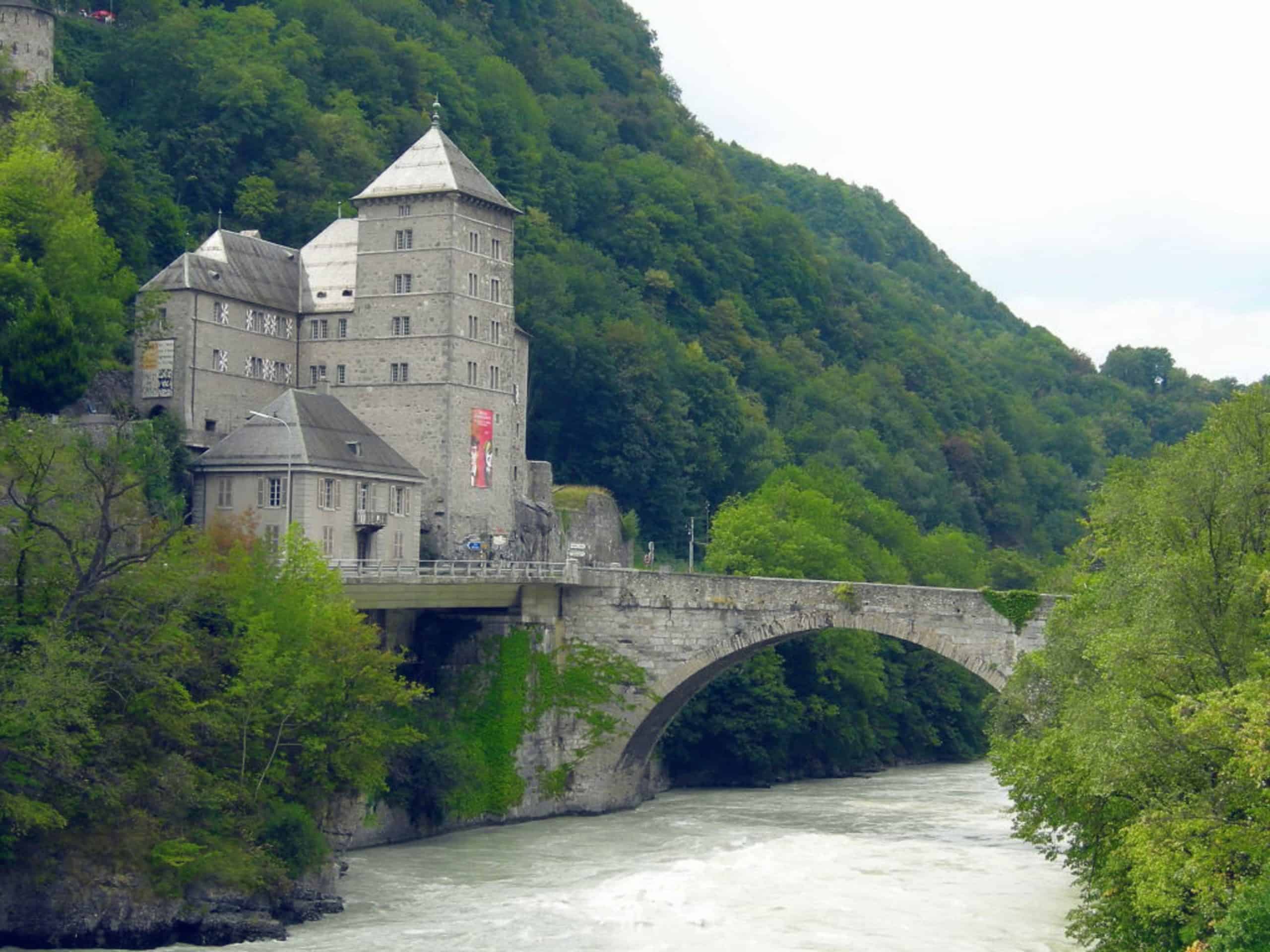
Where the Rhône leaves the central Alpine region through a narrow defile between mountains reaching 4,000 metres to the south and 3,000 metres to the north, the only comparatively easy access to the upper Rhône valley passes through the town of Saint-Maurice. For more than a century, this geographic bottleneck has been guarded by one of the most formidable fortress complexes ever constructed in the Alps.
Fortress Saint-Maurice is not a single installation but a network of forts built into the mountains on either side of the valley, positioned to dominate the entire region with overlapping fields of artillery fire extending as far as Lake Geneva. It represents one of the three pillars of the Swiss National Redoubt — alongside the Gotthard and Sargans complexes — and its history spans almost the entire arc of modern Swiss military planning, from the years before the First World War through to the end of the Cold War.
A Century of Fortification
The first fortifications at Saint-Maurice date to 1911, making this complex one of the earliest purpose-built components of what would become the National Redoubt. The initial construction focused on Fort Dailly and Fort de Savatan, positioned high on the mountainsides to provide commanding views and firing positions over the valley below.
As the European political situation deteriorated through the 1930s, the complex was massively expanded. Fort Cindey, Fort du Scex, Fort de Champillon, Fort Petit-Mont, Fort Toveyres, Fort Follatères, and Fort Commeire were added, creating a layered defensive network capable of denying passage through the valley against any attacking force.
Further south, Fort de Chillon was built directly opposite the famous medieval castle on Lake Geneva, extending the defensive perimeter to cover the western approaches. Fort de Champex was constructed at 1,450 metres altitude to guard the Val d’Entremont and Val Ferret approaches from Italy, remaining a military secret until 1999.
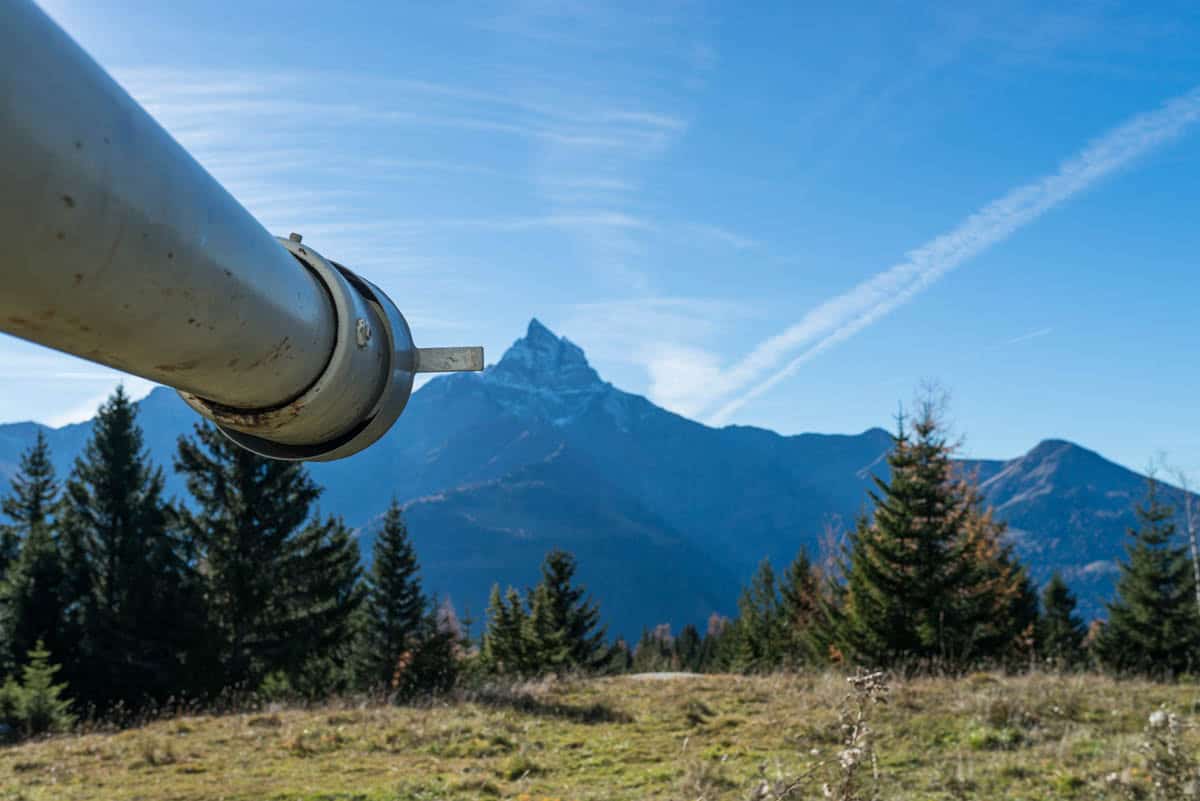
The forts were equipped with a range of artillery calibres, from machine guns to heavy cannons, all housed in positions carved deep into the mountain rock. The garrisons had self-contained living quarters, kitchens, hospitals, communications centres, and ammunition stores, designed for extended autonomous operation.
Declassification and Public Access
Fortress Saint-Maurice was decommissioned in 1995, ending 84 years of continuous military use. Since then, several of the forts have been opened to the public through the efforts of preservation associations and the Swiss military heritage programme.
The visitor experience at Saint-Maurice is unique among Swiss fortress museums because of the sheer variety available. Each fort has its own character and period of construction, offering different perspectives on how Swiss defensive engineering evolved over nearly a century. Fort Cindey provides a comprehensive overview of the fortress system; Fort du Scex offers some of the most dramatic mountain positions; and Fort de Champillon houses the Pyromin Museum.
One of the most atmospheric approaches is through the Grottes aux Fées — a natural cave system with an underground waterfall. A discreet steel door within the cave leads to one of the military installations, creating a transition between natural wonder and military engineering that feels almost cinematic.